
Controversial Tasting Notes
The Need for Imaginative Tasting Notes

Full spittoons sit next to wine blotched notebooks, they hold scribblings of 300 or so blind tasted Chardonnays from Sonoma County. A pair of weary ‘tasters’ recall some highlights, “...bottle 106 I think? It had citrus and tropical fruit with toast and good structure” says the Associate Taster. “That narrows it down” replies the Executive Taster before re-sampling bottle 106 and asking, “how many points did you give this one?”. The Associate eventually finds his score, “1 million 600 thousand, it didn't have the concentration to be a 2 million point wine”. A small post-lunch belch interrupts the Executive’s response, fortunately the tasting room’s laboratory conditions dissipate the smell efficiently, “I agree, a sub 2 million point wine but perhaps higher than your score, I like how medium-plus the body is. Would you reveal the producer to me?”. The Associate reveals the producer and the Executive changes his mind, “They have a famously large press meal soon, this is indeed a 2 million point wine”.
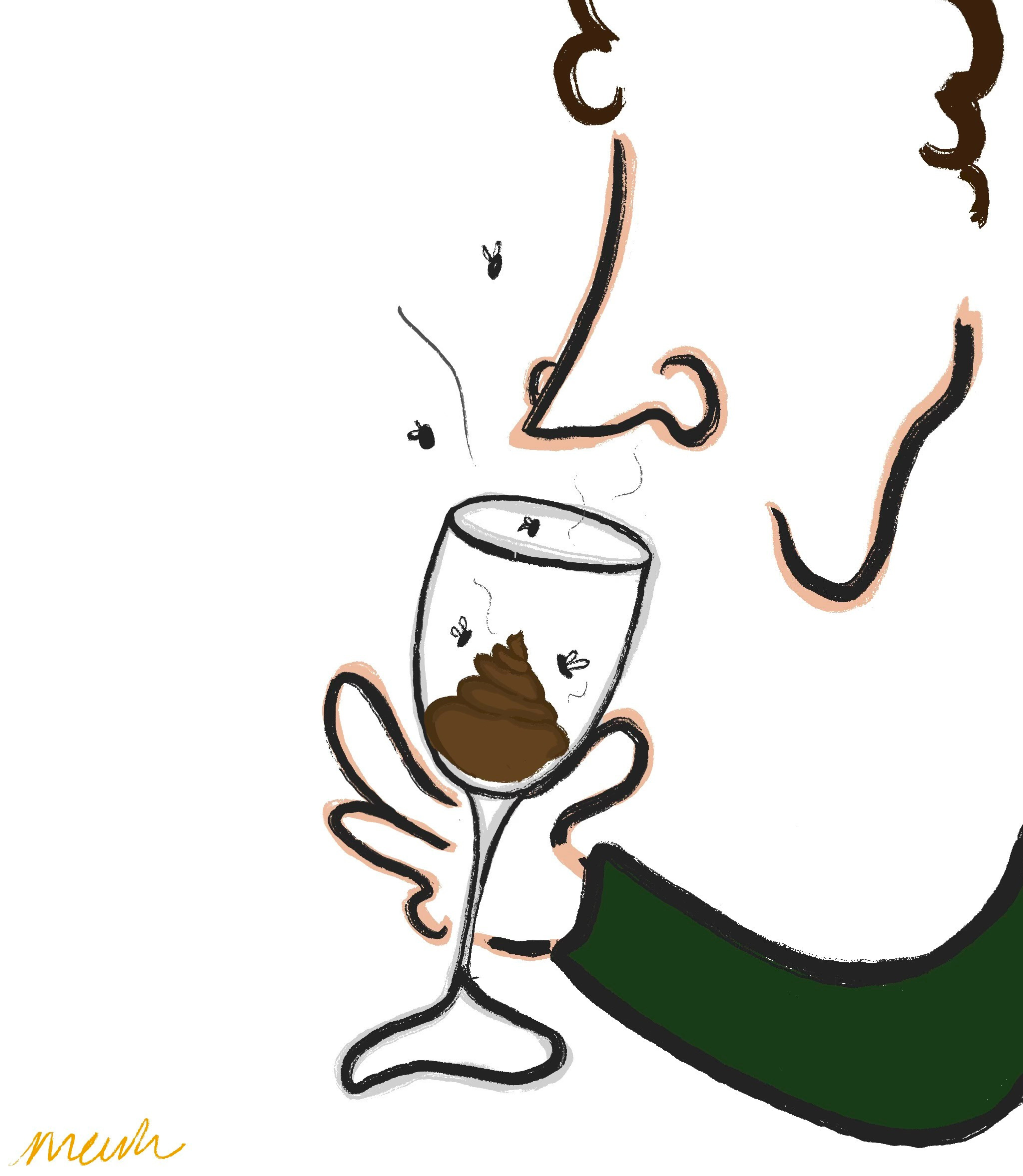
Points scores and tasting notes are boring and there are too many of them…
In Hannah Crosbie’s latest piece for Noble Rot, ‘I Drink Therefore I Am’, she tests if Chat GPT could replace a sommelier. A description provided by Chat GPT is redacted by Hannah due to its “WSET-pilled tasting note” (Wine and Spirit Education trust). The decision immediately had me wishing for more writers and reviewers to follow her lead.
Forgive me, let me fasten a Level-3-pin to my lapel and explain myself as an ex-student of the Wine & Spirit Education Trust. A “WSET-pilled tasting note” is a fairly generic note, one that lists fruits and ranks the wine’s features, like acidity and body. An example for New Zealand Sauvignon Blanc might be, ‘pale lemon in colour with a pronounced nose including lychees, passion fruit, and green-bell-pepper. Dry with high acidity, medium body, and a medium-plus finish’. The ‘systematic’ approach is an effective way to teach a person how to taste wine, think of it as palate calibration. But here lies the rub, when used outside an educational context it is a mandatory sentence to snooze.
Veteran Drinks Writer and wisdom-decanter, Andrew Jeffrey, speaks to this point on the ‘No Sediment Podcast’. He advocates for a more imaginative approach to tasting notes as opposed to the kinds churned out in bulk and accompanied by a points score (which may or may not correlate to how much the winery or PR firm is prepared to pay).
I won't name names, not least because many are professional, experienced writers who both have editors to appease and know considerably more than I. This is merely armchair criticism, a chubby bloke with a can of beer screaming at Mo Salah to pass the ball.
Let’s begin with this note on 2010 Ridge Monte Bello (one of North America’s most famed and cherished wines) as an example:
“Refined blackcurrant and garrigue nose. Herbal but not herbaceous. Quite rich, and solid, concentrated and firm, with a good tannic backbone. This is robust and structured, with refreshing acidity on the long finish. Still plenty of life in it. Delicious!”
The note’s author scored the wine 95 points meaning it’s quantitively brilliant (which is preferable if anyone asks you if it’s good). But why does the note read flat and removed? There’s a congruency issue between enthusiasm and score. Granted, you might say it’s a few casual lines about a delicious wine, there’s no need to chew the writer out for it, though I’d argue it’s exemplary of the problem so light chewing is entirely necessary.
Imagine you ask a music journalist how the KISS concert was and their response is, “the stage attire was complex, the guitars were tuned properly and the drums had a lovely depth of sound.” You’d be forgiven for wanting a more genuine reaction, perhaps even irritated at the lack of enthusiasm and stench of ‘professionalism’. Aside from being word-melatonin, the glaring problem with using ‘WSET-pilled’ language is how indistinguishable wines, or concerts, can become. The general list of fruits and remarks on structure, while accurate, fail to individualise the wine and share a visceral or relatable or interesting experience. The Monte Bello tasting note could equally apply to a thousand Cabernet Sauvignons which is evidently a failure.
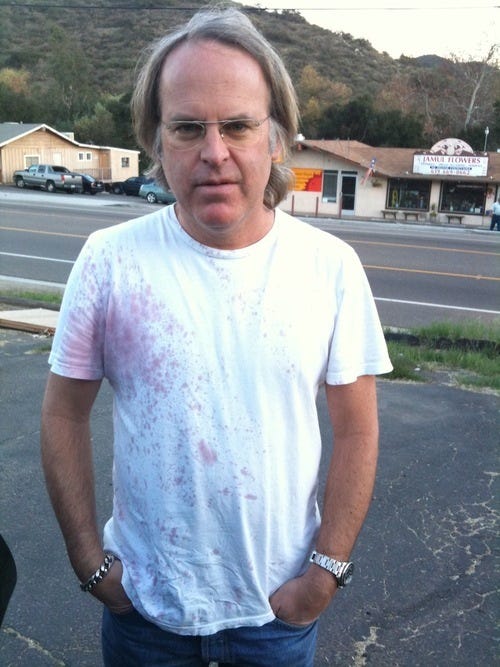
Now imagine how unmoved you’d be if the aforementioned music journalist boasted that they reviewed 800 concerts within a year, sort of like James Suckling’s approach, “25,000 wines tasted in 2019. More than any other wine critic!”. This isn’t just a language problem, it’s also a volume problem.
Take this title as evidence, “Germany: 1,061 Wines, Mainly from the 2022 and 2023 Vintages Along the Rhine, Main and Neckar Rivers”. Nobody can fault journalist’s productivity, but is an excessive volume of tasting notes a good thing? How valuable even is a tasting note? How often do subscribers of the well-known websites use them and does it make a difference if a wimpish 10,000 wines were reviewed instead of 30,000?
The volume spreads passion and imagination too thin and it’s unclear what is being prioritised if not volume? Must the consumer be informed (in a boring way) on as many wines as is humanly possible? That seems closer to hoarding taste-data than valuable consumer advice. The route to a decent bottle can be a labyrinth of technical jargon, expensive guesswork, and the odd foreign language shaped trap door. If more content had judiciously pruned recommendations with exciting, bizarre, amusing, or accessible tasting notes, then the consumer’s enthusiasm for wine might grow.
Admittedly, like any good armchair critic, my solutions are half baked and self-promoting. The best strategy is to set an example. Below is a list of controversial and imaginative tasting notes, the kind any self-respecting or accomplished wine writer wouldn’t dream of publishing:
“Like someone’s clubbed maraschino cherries with a leg of cured meat” (Barolo)
“The physique of Peter Crouch and power of the Australian Border Force” (GG Riesling)
“Tannins like melted chocolate” (Rioja Reserva)
“It’s mother’s milk, creamy in a way that’s deeply comforting” (Rich Champagne)
“A shoeless hobo has played keepy uppies with strawberries” (Reductive Jura Reds)
“Licking jam of a church pew” (Aged Chateauneuf-Du-Pape)
“Getting in a fight with a spice cupboard” (Australian Shiraz)
“Chewing on the pants of a South African rugby player” (Pinotage)
“Delicious gravel” (Chablis)
Make no mistake, this is no more than a wordy, Karen-sized, complaint. My only request is that if you care and know enough to discuss wine professionally, you should free your imagination and decrease your productivity as much as is editorially possible.
I always say (think I’ve written about it on my blog when I quit the diploma) that WSET are trying to “science” what is essentially an art. Leave the science to the winemaker and let us the taster go ham with our out of pocket descriptions. God it’s all so bloody boring otherwise.
Having gone through all the WSET levels I agree with you (and have written about the subject on my own Substack). However, I think it’s best not to go too much the other way and make tasting notes too abstract and metaphorical. The balance is somewhere between the two.